
Ohio sheriff sale docket screening takes about 15 minutes, costs nothing, and it's the one due diligence step almost every investor skips. Every foreclosure case in Ohio has a publicly accessible court docket on the county clerk's website. It tells you whether every party was properly served, whether anyone is contesting the sale, and whether the case has any procedural cracks that could blow up after you've already paid.
We've watched investors win at auction, dump money into renovation, then lose the property three months later because a judge vacated the sale over a service-of-process defect. The defect was sitting on the public docket the whole time. Nobody looked.
This guide covers what to look for, where to find it, and how to read the docket in Ohio's five highest-volume sheriff sale counties.
Why the court docket matters: the service defect risk
The asymmetry here is hard to overstate. Fifteen minutes of checking versus losing an investment worth tens of thousands of dollars. That's why we think this belongs at the top of every investor's pre-bid routine.
Ohio foreclosures are judicial. Every case goes through Common Pleas Court. Under ORC 2329.26, the sheriff must give proper notice of the sale to all parties in the case. Under ORC 2329.31, the court must confirm the sale after the auction before the buyer gets a sheriff's deed. If the court finds a procedural defect during confirmation (or after, on a motion to vacate), the sale can be set aside.
The buyer has no standing to fight it. Ohio case law is blunt: when confirmation is denied or vacated for procedural irregularity, "the rights of the purchaser fall to the ground." You lose the property, you lose your deposit, you lose whatever you spent after the sale.
Service-of-process defects are the most common reason sales get vacated. Every defendant named in the foreclosure (the borrower, junior lienholders, co-owners, tenants with recorded leases) must be properly served. If the plaintiff used service by publication on someone who was actually findable, that person can show up later and challenge the whole proceeding.
Don't confuse this with a title search. Title searches look at liens and encumbrances on the property itself. Docket screening is about whether the foreclosure case was conducted properly. You can have a spotless title search and still lose the sale because a junior lienholder wasn't properly served. That fact was visible on the docket the entire time.
What you're looking for on the docket
Every county court docket lists the same basic information, even though the websites look different. Three things matter:
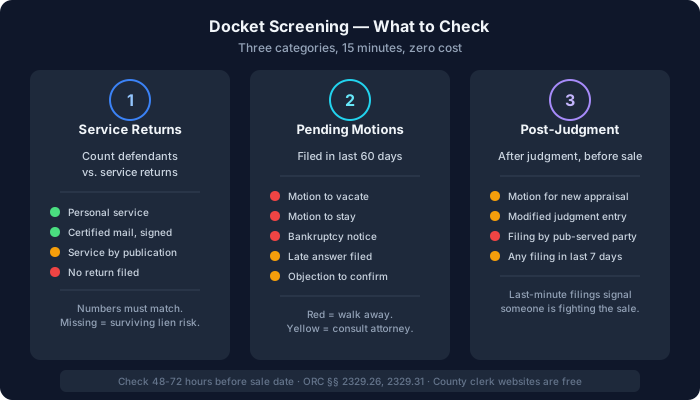
Service returns for all defendants
The docket will show how each named defendant was served. You want to see:
- Personal service (best): Sheriff physically handed documents to the defendant
- Certified mail, signed: Defendant signed for the certified mail
- Residential service: Left at the defendant's residence with a competent adult
What raises concern:
- Service by publication: The plaintiff published notice in a newspaper because they claimed the defendant couldn't be found. This is legally valid but fragile. If that defendant later proves they were findable, the sale unravels.
- No return filed: Service was attempted but no confirmation is on the docket. This is a hard stop.
Count the defendants listed in the complaint. Then count the service returns. Every defendant needs a return. If the numbers don't match, something is missing.
Pending motions
Look for any motion filed in the last 60 days, especially:
- Motion to vacate: Someone is actively trying to undo the judgment or sale
- Motion to stay: Someone wants the sale delayed (often pending appeal)
- Answer or response filed late: The borrower may be contesting the foreclosure
- Bankruptcy notice: If the borrower filed bankruptcy, an automatic stay kicks in and the sale should be postponed. Sometimes it isn't.
A pending motion doesn't always mean the sale will fail. But it means the case is contested, and contested cases carry risk that clean cases don't.
Post-judgment filings
After the court enters a foreclosure judgment but before the sale, things can still happen. Scan for:
- Objections to confirmation filed in advance
- Motions for new appraisal: Can delay and reset pricing
- Entries modifying the original judgment: Terms may have changed
- Any filing by a defendant who was served by publication: They may be surfacing to contest
The docket shows filing dates. Anything filed in the last 30 days before the sale date deserves your attention.
How to find and read the docket: county-by-county walkthrough
You need the case number to pull up the docket. The case number is on the auction listing, whether you're looking at the county sheriff's website or RealAuction. It looks something like "CV-24-123456" or "2024 CV 00456." Write it down before you start.
Cuyahoga County
Cuyahoga is Ohio's highest-volume sheriff sale county. We regularly track 60 to 80+ listings per week on our county recap page.
Where to go: Cuyahoga County Clerk of Courts, online case search. Search by case number in the Common Pleas division.
What you'll see: A case summary page showing parties, filing dates, and a list of all docket entries. Click into individual entries to see the actual documents (some are scanned images, some are text).
What to check first: Look for the service section. Cuyahoga lists service returns as separate docket entries. Count the defendants in the case caption, then count the service returns. Look for any entry labeled "publication" or "service by publication."
Tip: Cuyahoga's high volume means more cases, which also means more rushed filings. We've seen more service-by-publication entries here than in smaller counties. Don't let volume create a false sense of safety.
Franklin County
Franklin typically lists fewer properties per week, but average prices run higher (recently around $184K). See current numbers on our Franklin County recap.
Where to go: Franklin County Clerk of Courts, Common Pleas case search. Enter the case number directly.
What you'll see: A docket view with entries listed chronologically. Franklin's system is straightforward. Each entry has a date, description, and sometimes an attached document.
What to check first: Service returns and any motions filed after the judgment entry. Franklin's system clearly labels "Return of Service" entries. Also note: Franklin County is unique because the plaintiff's attorney sets the deposit amount at their discretion, rather than following the statutory flat-dollar tiers. This is a Franklin-specific rule, not statewide.
Tip: Franklin cases sometimes have more defendants (junior lienholders, municipal code enforcement parties) than other counties. More defendants means more service returns to verify.
Hamilton County
Hamilton has been showing increased competition recently, with sale rates doubling in recent weeks. Track the latest on our Hamilton County recap.
Where to go: Hamilton County Clerk of Courts online case search. Use the Common Pleas civil division.
What you'll see: A case detail page with parties, docket entries, and hearing dates. Hamilton's interface groups entries by type, which makes it easier to find service returns quickly.
What to check first: Service returns (look under the service/process section) and any entries filed in the 30 days before the sale. Hamilton cases sometimes include municipal parties (city of Cincinnati code enforcement), and each one needs proper service.
Summit County
Where to go: Summit County Clerk of Courts case search portal. Select the Common Pleas general division and enter your case number.
What you'll see: A chronological docket with entry descriptions. Summit's system is clean and readable. Service returns are labeled clearly.
What to check first: The same fundamentals. Service returns for every defendant, recent motions, and any post-judgment activity. Summit's caseload is moderate, so filings tend to be more straightforward than Cuyahoga's.
Montgomery County
Where to go: Montgomery County Common Pleas Clerk of Courts online records. Search by case number.
What you'll see: A standard docket listing. Montgomery County Local Rule 2.23.1 governs foreclosure procedures here, so you may see references to local rule compliance in the docket entries.
What to check first: Service returns and compliance entries. Montgomery sometimes has mediation-related entries in the docket if the borrower participated in a foreclosure mediation program. These don't affect sale validity but can indicate a more contested case.
Red flags that mean walk away
Not every issue on a docket kills the deal. But these should make you put your pen down:
-
Service by publication on a defendant with a known Ohio address. If the docket shows a defendant was served by publication but also lists their home address in Ohio, that's a contradiction worth walking away from. Publication is supposed to be the last resort when someone can't be found.
-
A motion to vacate filed by any party. Active. Pending. Not yet ruled on. Walk away.
-
Missing service returns. If there are four defendants and only three service returns, the fourth lien may survive the sale. (Remember: junior liens are only extinguished if their holders were properly named and served in the foreclosure.)
-
Bankruptcy filing notice on the docket. The automatic stay should halt the sale. If the sale is still scheduled, something may be wrong procedurally.
-
Any filing in the last 7 days. Last-minute filings often signal that someone is trying to stop the sale. Even if it doesn't succeed, it creates uncertainty around confirmation.
-
Objection to confirmation already filed before the sale occurs. Someone is planning to fight the sale at the confirmation hearing. The odds of a smooth closing just dropped.
Your pre-bid docket screening checklist
Print this out and fill it in for every property you plan to bid on.
Case information
- Case number: _______________
- County: _______________
- Date you checked the docket: _______________
- Sale date: _______________
Service of process
- Total defendants named in case: ___
- Total service returns on docket: ___
- All defendants served? YES / NO
- Any service by publication? YES / NO
- If yes, defendant name: _______________
- Does the docket also list a physical address for this person? YES / NO
- Service method for each defendant noted (personal, certified mail, publication)
Pending motions and recent activity
- Any motion to vacate? YES / NO
- Any motion to stay? YES / NO
- Any bankruptcy notice on docket? YES / NO
- Any filings in the last 30 days? YES / NO
- If yes, describe: _______________
- Any objection to confirmation filed? YES / NO
Verdict
- Docket is CLEAN: all defendants served, no pending motions, no recent red-flag filings
- Docket has CONCERNS: proceed with caution, consider consulting an attorney
- WALK AWAY: service defect, pending motion to vacate, or bankruptcy notice
How docket screening fits with your other due diligence
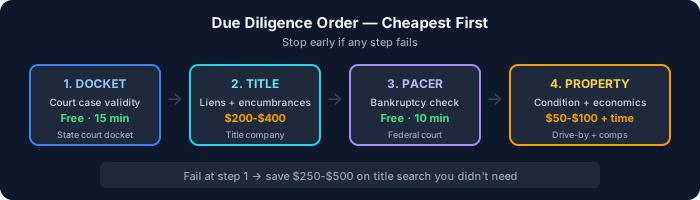
Docket screening is one layer in a stack. It goes first, but it doesn't replace the rest.
Docket screening (state court, case validity) is what we just covered. Do this first. If the case is defective, nothing else matters.
Title search (property records, lien validity) checks what liens and encumbrances attach to the property. Surviving liens in Ohio include property tax liens (ORC 5721.10), special assessments, water/sewer liens, municipal code violation liens, and IRS federal tax liens. The IRS also gets a 120-day redemption right after the sale. For the full breakdown, see our hidden costs guide.
PACER check (federal court, bankruptcy) confirms the borrower hasn't filed bankruptcy outside of the state court case. Sometimes a bankruptcy filing happens after the state court docket was last updated.
Property condition means a drive-by inspection, neighborhood review, renovation estimates. We cover this in our due diligence checklist guide, which walks through every step from case screening through property evaluation.
Bidding comes last. Once the case is clean, the title is manageable, there's no bankruptcy, and the property condition works for your numbers, you bid. For the mechanics, see our how to bid guide. And remember: Ohio sheriff sales have no contingencies. Once you win, you own the outcome.
The order matters. Screen the docket first (free, 15 minutes). If it's clean, run the title search (costs money). If that's clean, check PACER (free but takes time). If all three pass, then evaluate the property and the deal economics.
FAQ
Can I access the court docket online for free?
Yes. Every Ohio county has an online clerk of courts portal where you can search Common Pleas cases by case number. The docket is public record. No account needed, no fee.
How do I find the case number for a sheriff sale property?
The case number is listed on the auction posting. Whether you're checking the county sheriff's auction page or RealAuction (the statewide online platform), the case number is included with each listing. It typically looks like "2024 CV 00456" or "CV-24-123456."
What if I find a service-by-publication entry but everything else looks clean?
Service by publication isn't automatically a dealbreaker, but it's a yellow flag. It means the plaintiff claimed they couldn't find that defendant. If the defendant was genuinely unreachable (moved out of state, no known address), publication service holds up. If they were living two streets over and could have been personally served, it doesn't. You can't always know from the docket alone. If the property economics are strong and this is the only flag, consider having a real estate attorney review the case file before you bid.
Does this replace a title search?
No. They check different things. The docket tells you whether the foreclosure case was properly conducted. The title search tells you what liens and encumbrances are on the property. You need both. A clean docket with an ugly title (surviving tax liens, IRS liens, special assessments) is still a problem. And a clean title with a defective docket means you might not keep the property long enough for the title to matter.
How far in advance of the sale should I check the docket?
Check 48 to 72 hours before the sale date. This gives you the most current picture while still leaving time to walk away if something is wrong. Checking too early (a week or more out) means you could miss last-minute filings. Checking the day of doesn't leave you time to investigate flags or adjust your plan.
Fifteen minutes on the county clerk's website tells you whether the case behind the auction is solid or shaky. That's it. No cost, no account, no special access. Just a browser and the case number from the listing.
Once you've confirmed the case is clean, check the deal economics. AuctionScout's county recap pages update weekly with sale rates, average discounts, and trend data for every major Ohio county. Set up alerts on AuctionScout to track properties in your target counties. Takes 30 seconds.