A single $600 delinquent tax bill on a dormant parcel in Summit County can now disqualify you from bidding at a tax foreclosure sale in Cuyahoga County, Franklin County, or anywhere else in Ohio. The auction platform won't stop you from placing bids. They'll just be void.
Since April 9, 2025, Ohio Revised Code 5721.19(J) has required every tax foreclosure bidder to submit a notarized affidavit confirming they owe no delinquent property taxes anywhere in the state. We've tracked 13 counties actively enforcing this rule so far, and the list keeps growing. If you bid at tax foreclosure sales (or plan to), here's what changed and how to stay compliant.
What changed: ORC 5721.19(J)
Effective April 9, 2025, Ohio added subsection (J) to the existing tax foreclosure statute. The rule is straightforward: you cannot bid at a tax foreclosure sheriff sale if you (or certain entities you own) have delinquent property taxes on any parcel in Ohio.
To prove compliance, you submit a notarized affidavit before the sale. Not a digital form. Not a checkbox on the bidding platform. A physical, notarized document delivered to the sheriff's office by a hard deadline.
Counties confirmed enforcing: Lucas, Cuyahoga, Clermont, Stark, Clark, Wood, Hamilton, Washington, Gallia, Muskingum, Union, Fairfield, and Erie. We expect all 88 counties to enforce this within the next year since it's statutory, not discretionary.
Tax foreclosure vs. mortgage foreclosure: why most investors miss this
Both tax foreclosure and mortgage foreclosure sales run through the same sheriff sale process. Same platform (RealAuction). Often the same auction day. The docket doesn't always make the difference obvious.
But the rules are different. The affidavit requirement applies only to tax foreclosure sales (brought by the county under ORC 5721). Mortgage foreclosure sales (brought by lenders under ORC 2329) have no such requirement.
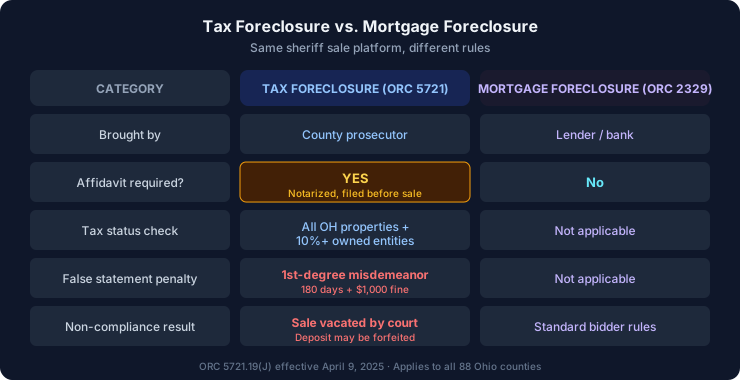
If you've been buying at mortgage foreclosure sales for years without filing any affidavit, that's correct. You didn't need one. The moment you bid on a tax foreclosure case, though, you're in a different regulatory lane. We track which sales are tax vs. mortgage foreclosure across every Ohio county on our recap pages, so you can filter before you bid.
The 10% pass-through entity rule: why your LLC portfolio is your biggest exposure
The affidavit doesn't just cover properties you own personally. It covers any property owned by a pass-through entity (LLC, partnership, S-corp, per ORC 5733.04) in which you hold at least 10% interest. That's where portfolio investors get burned.
Run three LLCs that each hold rental properties? You need to verify that every single parcel across all three entities is current on taxes. One missed installment on one parcel in one LLC disqualifies you entirely.
We see this constantly: an investor holds 15 properties across four LLCs, one vacant lot has an $800 delinquent bill nobody noticed, and now they can't bid at any tax foreclosure in the state. The more properties you hold, the more likely something slips through.
The phantom bid trap: how you can "win" and still lose the deal
The RealAuction platform has no eligibility gate. You can register, log in, and place bids on tax foreclosure properties without ever submitting an affidavit. The platform treats your bid as valid during the auction.
Then the sheriff's office reviews compliance after the auction closes. If you "won" but didn't file the affidavit (or filed a false one), the sheriff moves the court to vacate the sale. You lose the property. You may lose your deposit at the court's discretion. And you've wasted weeks of due diligence on a deal that was never yours.
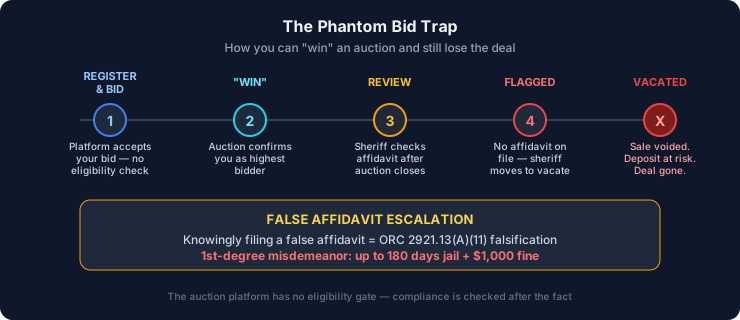
Everything looks normal until it isn't. You get a confirmation, you think you won, and then it gets vacated. Knowingly filing a false affidavit makes it worse: that's falsification under ORC 2921.13(A)(11), a first-degree misdemeanor carrying up to 180 days in jail and a $1,000 fine.
How to check your tax status across Ohio counties
Before you bid at any tax foreclosure sale, run through this:
- List every property you own personally. Include land, vacant lots, rentals, your primary residence.
- List every pass-through entity where you hold 10%+ interest. Pull your operating agreements if you're not sure of your percentage.
- For each entity, list every property it owns. Don't forget dormant LLCs holding land-banked parcels.
- Check each property with the relevant county treasurer. Most Ohio county treasurer websites have online tax lookup tools. Search by parcel number or address.
- Pay any delinquent amounts immediately. Even a $50 installment balance counts. The statute doesn't set a minimum threshold.
- Get the affidavit notarized. Use the form provided by the county sheriff's office (they vary slightly by county). Don't use a generic template.
- Submit by the deadline. See below.
For portfolio investors, this process can take a full day the first time. After that, it becomes a quarterly maintenance task: check every parcel, pay anything outstanding, keep your affidavit current.
Deadline calendar: when the affidavit must be filed
Each county sets its own submission deadline, but the pattern is consistent: the affidavit must arrive before the sale, not the day of.
| County | Sale Day | Affidavit Deadline |
|---|---|---|
| Lucas | Thursday | Wednesday 10:00 AM (24 hrs prior) |
| Cuyahoga | Monday | Prior Friday by close of business |
| Hamilton | Friday | Wednesday by 4:00 PM |
| Stark | Monday | Prior Thursday by noon |
| Clermont | Varies | 48 hours before sale |
If your county isn't listed, call the sheriff's civil division directly. Ask two questions: (1) what's the deadline for the tax affidavit, and (2) do they accept it by mail, in person, or both. Most counties require physical delivery. A few accept fax.
Out-of-state investors bidding through RealAuction online: you still need to get a physical notarized affidavit to the sheriff's office. Plan for mail time or use a local agent.
Exceptions and edge cases
The statute carves out three situations where delinquent taxes don't disqualify you:
- The delinquent amount has been paid in full before the affidavit is signed. Pay it, wait for the treasurer to process it (can take 2-5 business days to clear), then sign.
- The delinquency resulted from a misassignment or administrative error. Rare, but it happens with split parcels or recent transfers where the auditor misassigned the tax bill.
- The property ownership is subject to pending litigation. If you're actively contesting ownership (partition actions, estate disputes), the delinquency on that parcel doesn't count.
One additional note: properties being paid under an installment contract per ORC 323.31 are not considered "delinquent." If you have an active payment plan with the treasurer and you're current on installments, you're clear.
Fewer bidders means wider margins
This rule thins the pool at tax foreclosure sales. Portfolio investors who let small bills slide, casual bidders who don't know the rule exists, out-of-state investors who can't handle the notarization logistics. They're all either disqualified or deterred.
We've seen this on Franklin County tax foreclosure dockets over the past year. Sale rates on tax foreclosure properties have stayed lower than mortgage foreclosure properties on the same docket. Fewer qualified bidders, less competition, wider margins for investors who keep their tax house clean.
The compliance cost is a few hours of verification, a trip to a notary, and submitting paperwork on time. The payoff is a bidding pool where your competition just got smaller.
Start your free trial at auctionscout.app to track tax foreclosure vs. mortgage foreclosure sales across all Ohio counties. Filter by sale type, check county deadlines, and know exactly what you're bidding on before auction day.