
Sheriff sale auctions move fast. Properties sell as-is, with no inspection contingency, and the winning bidder typically has minutes — not days — to commit. That's why pre-auction research isn't optional. It's the entire game.
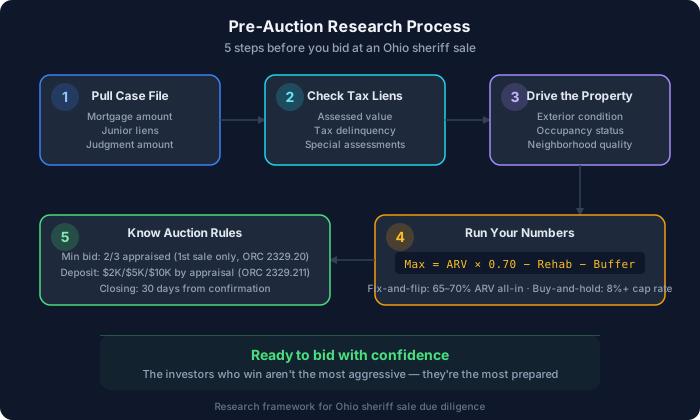
Step 1: Pull the Case File
Every Ohio sheriff sale property has a corresponding court case file. The case number is published with the auction listing. Go to the county clerk's website and search the case to find:
- The original mortgage amount and lender
- Any junior liens (HOA, mechanic's liens, IRS)
- The judgment amount — this sets a floor for what the bank will accept
Why it matters: If total liens exceed the property's value, the bank may pull the auction or set a high minimum bid.
Step 2: Check for Tax Liens and Back Taxes
Even after purchase, you inherit unpaid property taxes. Check the county auditor's website for:
- Current assessed value (appraised value in the auction listing)
- Tax delinquency balance
- Any special assessments (sewer, water, sidewalk repairs)
In some Ohio counties, delinquent taxes run into the tens of thousands on distressed properties. AuctionScout surfaces the appraised value automatically so you can quickly check the discount you're working with.
Step 3: Drive the Property
This sounds obvious but many bidders skip it. You're looking for:
- Exterior condition: Roof, foundation visible issues, broken windows, fire damage
- Occupancy: Is someone living there? Ohio has specific redemption laws that affect your timeline
- Neighborhood trajectory: Are neighboring homes maintained? Recent sales?
You can't enter, and you should stay off the property if it's occupied — Ohio trespassing law (ORC § 2911.21) applies to bidders just like anyone else. Observe from the public street: roof line, siding, windows, yard condition, and neighborhood context all tell a story from the curb.
Step 4: Run Your Numbers
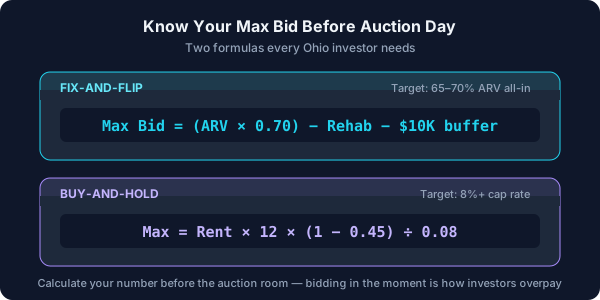
Before you set foot in the auction room, know your max bid. Work backwards from ARV:
Max Bid = ARV × Target LTV − Rehab Estimate − Holding Costs − Profit Margin
For fix-and-flip: target 65–70% of ARV all-in. For buy-and-hold: target a cap rate above 8% at your purchase price.
AuctionScout's investment analysis calculator runs these numbers automatically for every property in the database.
Step 5: Know the Auction Rules
Ohio sheriff sale rules vary by county:
- Minimum bid: 2/3 of appraised value on the first sale (ORC 2329.20). If no one bids, the property is relisted within 7 to 30 days with no minimum — it goes to the highest bidder (ORC 2329.52)
- Deposit: Fixed by ORC 2329.211 based on appraised value — $2,000 (appraised ≤$10,000), $5,000 ($10,001–$200,000), or $10,000 (>$200,000), due immediately in certified check or cash
- Closing timeline: Usually 30 days from confirmation of sale
Most Ohio counties now run their auctions online through the state-mandated RealAuction platform (ORC 2329.153). Register and get approved before auction day, and have your deposit funds ready for wire transfer or certified check per county rules.
The investors who consistently win at sheriff sales aren't the ones taking the biggest swings — they're the ones who've done the work before the gavel drops.