A BiggerPockets investor won a sheriff sale bid for $12,000. Drove to the property. Found an empty lot. The house had been demolished six months before the auction. Nobody told them. Nobody had to. A $300 pre-bid check would have caught it.
Ohio sheriff sales don't allow property inspections before the sale is confirmed. That's the law. You can't walk through the house, poke the foundation, or check the furnace. You bid on what the county records say exists, and you hope the records are right. That is the practical meaning of buying with no contingencies.
But "sight-unseen" doesn't mean "blind." There are at least eight ways to evaluate a property's physical condition before you ever raise your hand at auction. None of them require stepping foot inside. All of them are free or close to it. And skipping any of them is how you end up owning a vacant lot.
What you CAN see from the street
Ohio law doesn't say you can't drive past the property. It says you can't enter. So drive past it. Then park and look.
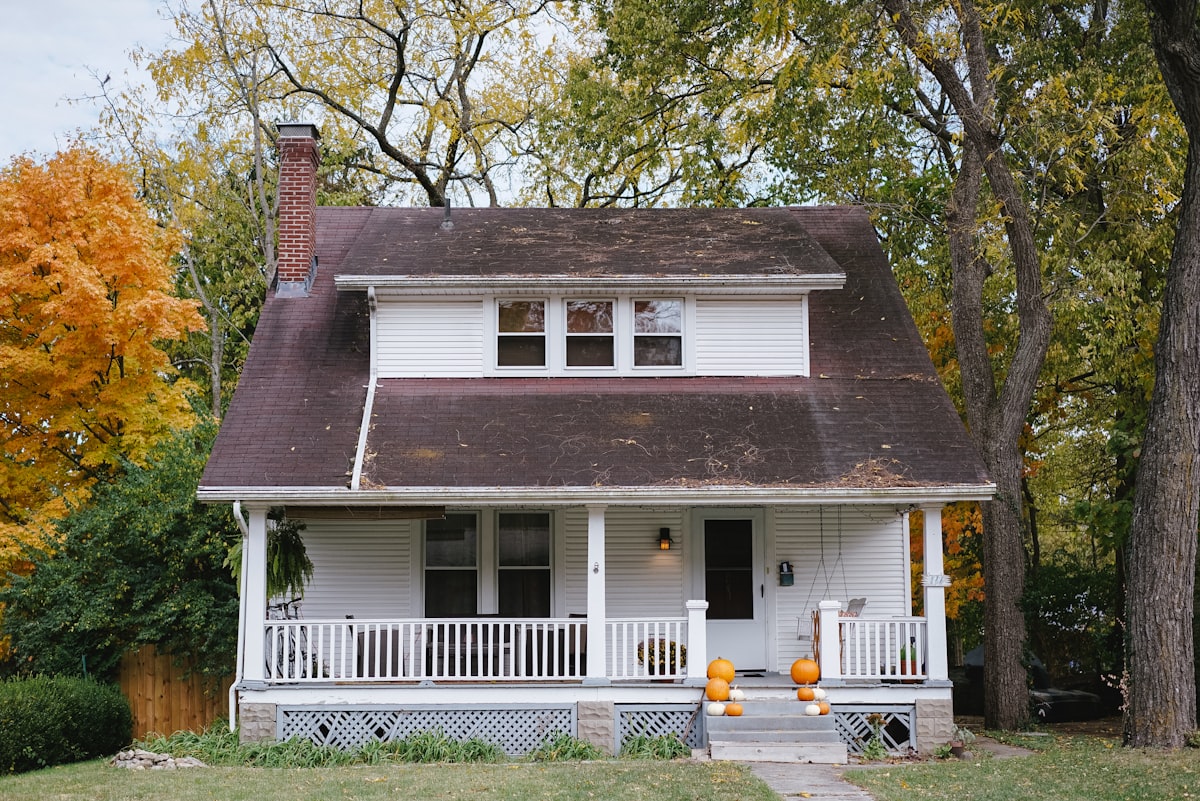
Start with the roof. Missing shingles, sagging ridgelines, visible tarps. A blue tarp on a roof means someone already knows there's a problem and chose the cheapest possible fix. If the roof is visibly bowed in the middle, you're looking at structural damage, not just a re-roof.
Walk the perimeter from the sidewalk and check the foundation. Horizontal cracks are worse than vertical ones. Horizontal cracks mean lateral pressure from soil or water, and that's a $15,000-to-$40,000 fix. Vertical cracks can be settlement. Still not great, but less expensive.
Count the compromised windows. Boarded-up windows tell you the property has been vacant long enough for the city or a neighbor to complain. Broken glass with no board-up means nobody's watching. At $300-$800 per window replacement, it adds up fast on a house with eight or ten of them.
Look at the yard. Overgrown to the point of hiding the foundation? That's 12+ months of vacancy. And look at the neighboring properties too. If three houses on the block are in the same condition, you're looking at a neighborhood-level problem, not just a property-level one.
Check whether the electric meter is still attached. Gas meter present? If the utility company pulled the meter entirely (not just shut it off), reconnection gets more complicated and more expensive.
Don't forget the street itself. Dead-end with no curbs and failing pavement? That affects your ARV. Properties on well-maintained streets with sidewalks comp higher. This is obvious, but investors fixated on the property forget to evaluate what's around it.
Take photos of everything. We've seen investors do a drive-by, take mental notes, then confuse details across three properties by the time they get home. Phone photos with timestamps. Every angle.
Mining the county auditor's records
Every Ohio county has an auditor website with free property data. Some are better than others (Franklin County's is excellent, some rural counties are still running software from 2005), but all of them have the basics.
Start by comparing the auditor's listed square footage to what you see from the street. If the auditor says 1,800 sq ft and the house looks like 1,200, either there's been a partial demolition, an addition was removed, or the records are wrong. Any of those is a red flag.
Then pull the assessment history. A sudden drop in assessed value (say, $85,000 to $45,000 in one reassessment) usually means the county noticed physical deterioration. Counties don't lower assessments for fun. Something happened.
Ownership transfers tell their own story. Properties that have changed hands three times in five years? Likely a problem property that each owner tried to flip and couldn't. Especially if the sale prices dropped each time.
Look at tax payment patterns too. Two or more years of delinquent taxes is the baseline for ending up at sheriff sale. But look at when the taxes stopped being paid. That tells you roughly when the owner gave up, which tells you how long the property has been deteriorating without maintenance.
The auditor site often shows building permits as well. A property with zero permits over 30 years either had a very handy original owner or has had zero updates to electrical, plumbing, and HVAC in three decades. More on permits in a dedicated section below.
For Franklin County, pull records at the county auditor site. Then cross-reference what you find on AuctionScout's Franklin County recap page, where we aggregate auction history so you can see how the numbers stack up against recent sales.
Google Street View timeline analysis
Most underrated tool in sheriff sale property due diligence. Google Street View has historical imagery going back 15+ years for most Ohio counties. You can literally watch a property fall apart over time.
Here's how to use it:
- Drop the yellow pegman on the property's street in Google Maps.
- Click the clock icon in the upper left of the Street View window.
- Drag the timeline slider back through available dates.
A house that looked fine in 2018, had a tarp on the roof in 2020, and shows boarded windows in 2023 tells you exactly what happened and roughly when. That timeline helps you estimate how long the property has gone without maintenance.
Watch for missing structures. A detached garage in 2019 imagery that's gone in 2022? That's either a demolition or a collapse. Either way, the auditor's square footage might still include it.
New siding or a roof replacement visible between two capture dates means someone put money into the property at some point. Check if there's a corresponding building permit. If they did the work without permits, you might inherit code violations.
Cars in the driveway in recent imagery suggest occupancy. No vehicles for three straight captures (often spanning 2-4 years) confirms long-term vacancy. And a maintained yard that turns into a jungle between captures gives you a window on when the property was abandoned.
We track properties across Ohio on AuctionScout, but Street View gives you the visual context that data alone can't. Pair the two. The data tells you the numbers. Street View tells you the story.
What permit history reveals about condition
Municipal permit databases are separate from county auditor records. Cities like Columbus, Cleveland, and Cincinnati have their own online portals. Smaller municipalities might require a phone call or an in-person records request.
A property built in 1955 with no electrical permits ever filed likely still has its original wiring. That's knob-and-tube or early Romex, and your insurance company may refuse to cover it without a full rewire. Budget $8,000-$15,000.
Same logic applies to plumbing. Original galvanized steel pipes in a 1960s house? Those are corroding from the inside. You won't know until you turn the water on and find brown water or low pressure.
A roof permit from 2015 means the roof is roughly 10 years old. No roof permit ever? Either the roof is original (and you're looking at an immediate replacement) or someone did the work without pulling permits. Unpermitted roof work often means shortcuts.
The biggest red flag in permit records: permits opened but never closed. An open permit means work was started but never inspected and approved. The city considers that work incomplete. You may inherit the obligation to bring that work up to code and get it inspected, or tear it out and start over. Open permits can hold up resale, refinancing, and insurance.
Check for demolition permits here too. A partial demo permit (removing an addition or a garage) changes the property's footprint from what the auditor might show. Covered in its own section below.
Red flag combinations: a property with multiple open permits, no recent activity, and delinquent taxes is a property where someone started renovating, ran out of money, and walked away. The renovation might be half-finished behind those boarded-up windows.
Checking utility status for shutoffs and damage clues
You can call the local utility companies and ask about service status for a specific address. You don't need to be the property owner to ask if service is active or inactive. Some utilities will give you more detail than others, but most will confirm at minimum whether service is on or off.
For electric (typically AEP, Duke Energy, or FirstEnergy in Ohio), ask when service was disconnected. A shutoff date gives you a timeline for vacancy. A property without power for three years has had no sump pump running for three years. In Ohio, that often means a flooded basement.
Gas is where it gets expensive. Gas shutoff in November means the property went through winter without heat. Unheated properties in Ohio winters get freeze damage: burst pipes, cracked radiators, split water heaters. One winter without heat can cause $10,000-$25,000 in plumbing damage. Two winters? Budget accordingly.
Water shutoff combined with gas shutoff is the worst combination. It means nobody winterized the plumbing (you'd drain the pipes before shutting off heat if you were planning ahead). Expect frozen and burst pipes.
Restoration costs vary but aren't typically huge. Electric reconnection is usually straightforward if the meter is still present ($50-$200 plus any deposit). Gas reconnection may require an inspection of the gas lines and appliances before the utility will turn it back on. Water reconnection in some Ohio municipalities requires a plumbing inspection. None of these is a dealbreaker individually, but they add up, and they add time to your project timeline.
What insurance claims history tells you (CLUE reports)
CLUE (Comprehensive Loss Underwriting Exchange) reports track insurance claims filed on a property for the past seven years. LexisNexis maintains the database, and property owners can request their own CLUE report for free. As a prospective buyer at a sheriff sale, you can't pull one directly. You can request one through the seller (unlikely in a sheriff sale) or look for indicators another way.
When you can get a CLUE report, pay attention to water damage claims first. That's the number one category. Multiple water damage claims suggest an ongoing issue: a leaking roof, failed plumbing, or basement flooding that keeps recurring. One claim could be a fluke. Three claims in five years is a pattern.
Even a small fire claim can point to electrical issues that caused the fire in the first place. If the fire was repaired, great. If it was claimed but the repairs look incomplete (visible from your drive-by), the insurance payout may have been spent elsewhere.
Wind and hail claims are common in Ohio. A wind claim from 2019 with no corresponding roof permit means the roof was either repaired without permits or the claim was paid out but the work was never done. Both are problems.
And here's the counterintuitive one: a property with zero claims over seven years either had a very careful owner or (more likely for a sheriff sale property) the owner let their insurance lapse years ago. Damage that occurred after the insurance lapsed won't appear on CLUE at all. No claims doesn't mean no damage.
Since pulling a CLUE report directly isn't always possible, use the other methods in this guide to triangulate. If the drive-by shows roof damage, Street View shows it appeared two years ago, and there are no roofing permits, you can reasonably assume the damage hasn't been repaired regardless of what CLUE would say.
Making sure your house still exists
Back to that $12,000 empty lot. Here's how you avoid being that person.
Search the municipality's permit database for demolition permits on the address. In Columbus, you can search online through the Department of Building and Zoning Services. Cleveland, Cincinnati, Akron, and most mid-size Ohio cities have similar portals.
Many Ohio cities also maintain lists of condemned or "placarded" properties. These are properties the city has deemed unsafe for occupancy. A condemned property may or may not be slated for demolition, but it tells you the city has already flagged serious structural or safety issues.
Municipal code enforcement records show complaints and violations filed against a property. Repeated violations for "failure to maintain" or "unsafe structure" are a trajectory toward demolition. If the city has issued an order to demolish and the owner hasn't complied, the city may demolish it themselves and attach the cost as a lien.
Check land bank inventory too. Ohio county land banks (like the Franklin County Land Bank) acquire, manage, and sometimes demolish problem properties. If your target property appears in the land bank's inventory, the land bank may have plans for it that conflict with yours.
And remember, not every demolition takes the whole house. An unsafe addition, a collapsing garage, or a condemned porch might be demolished while the main structure remains. The auditor's records may still reflect the pre-demolition footprint. Your drive-by and Street View analysis should catch this discrepancy.
The demolished-house scenario is extreme but not rare. In Cuyahoga County alone, the land bank has demolished thousands of properties over the past decade. Summit County, Lucas County, and Montgomery County have similar programs. If you're bidding in any of these markets, demolition lookups aren't optional.
For county-specific auction data including property histories and sale results, check AuctionScout's county recap pages. We cover Ohio counties with weekly-updated dashboards showing auction volume, sale rates, and discount trends.
Putting it all together
The order that makes the most sense for your time: start with county auditor records (five minutes, confirms the property exists and flags obvious issues), then Google Street View (ten minutes for visual confirmation), then permit history (ten to fifteen minutes depending on the municipality). After that, do the drive-by (thirty minutes including drive time, confirms or contradicts everything above). Then call the utilities (fifteen minutes across three calls), run demolition and condemnation checks (ten minutes), and pull a CLUE report if you can get one.
Total: roughly 90 minutes per property. That sounds like a lot until you remember the alternative is bidding $30,000 on a house with burst pipes, an open electrical permit, and a partial demolition you didn't know about.
Not every property needs all seven steps. A well-maintained-looking house in a stable Cuyahoga County suburb probably doesn't need a demolition permit lookup. But a vacant property in an area with active land bank demolitions? Run every check.
The sheriff sale property inspection ban exists to protect occupants' rights during the redemption period. It's not going away. But the information you need to make a smart bid is out there, scattered across county records, municipal databases, utility companies, and your own two eyes from the curb. The investors who do this work consistently are the ones who avoid buying empty lots.
Ready to research your next sheriff sale property? AuctionScout's county recap pages have detailed auction data across the Ohio counties we track. Start your free trial and see what's coming up in your target market.