
Philadelphia runs two separate property auction systems, and investors mix them up constantly. Sheriff sales handle mortgage foreclosures. Tax sales handle delinquent property taxes. Different offices run them. Different rules govern what happens to liens. And the timelines for actually getting your deed and title insurance are nothing alike.
We see the confusion every week on BiggerPockets. Someone asks about "buying at auction in Philly" and the answers jump between sheriff sale rules and tax sale rules without anyone flagging that they're two completely different processes. This guide lays out what's actually different so you walk into the right auction with the right expectations.
A note on AuctionScout coverage: we track sheriff sales (mortgage foreclosures) across seven Pennsylvania counties, but Philadelphia is not one of them. Our PA counties are Butler, Fayette, Lancaster, Lebanon, Pike, Washington, and York. We're writing this guide because the sheriff sale vs. tax sale confusion is the single most common question PA investors ask, and nobody else has answered it clearly. You can see all our covered counties at auctionscout.app/counties.
Quick definitions
A few terms before we get into it, especially if you're coming from Ohio or another state:
- Sheriff sale: Pennsylvania's term for a foreclosure auction. A lender sues a homeowner who stopped paying, wins a court judgment, and the county sheriff sells the property to satisfy the debt. This is judicial foreclosure.
- Tax sale: The City of Philadelphia sells properties where the owner hasn't paid property taxes. Tax collection, not a court-ordered foreclosure. In PA, tax sales follow a multi-stage process (upset sale, then judicial sale, then repository) with different rules at each stage.
- Lien: A legal claim against a property. Mortgages, tax bills, water bills, contractor bills, code violation fines. What survives after a sale depends entirely on which type of sale you're buying at.
- Title insurance: A policy that protects you (and your lender) if someone shows up later claiming a legal interest in the property. You can't get it until you have your deed in hand, which matters a lot in Philadelphia.
If you've bought at sheriff sales in Ohio, PA's process will feel familiar but not identical. Coming from a tax sale background? Almost nothing works the same way.
Sheriff sales: mortgage foreclosure through the courts
How they work
Philadelphia sheriff sales are judicial foreclosures. The sequence:
- A borrower defaults on their mortgage (typically 90+ days behind).
- The lender files a foreclosure lawsuit in the Court of Common Pleas.
- The court issues a judgment and a writ of execution.
- The Philadelphia Sheriff's Office schedules the property for sale.
The sheriff's office runs the sale. The plaintiff (the lender) sets the opening bid, usually reflecting the outstanding loan balance plus legal fees. There's no published appraisal value like you'd see in Ohio.
Where they happen
Philadelphia sheriff sales are on Bid4Assets (bid4assets.com). This is the part BiggerPockets threads get confused about. To be clear: Philadelphia sheriff sales happen on Bid4Assets. You'll need to pre-register and post a deposit before you can bid.
If you're used to Ohio, where sheriff sales run through the RealAuction/RealForeclose platform under a statewide mandate (ORC 2329.153), PA is different. There is no statewide platform mandate in Pennsylvania. Philadelphia chose Bid4Assets. Other PA counties may use different systems. Always check the specific county sheriff's website for current platform details.
What happens to liens
In a sheriff sale, the court process determines which liens get extinguished and which survive. In general terms for judicial foreclosure states:
- The foreclosing mortgage is satisfied by the sale.
- Junior liens (second mortgages, judgments filed after the first mortgage) are generally extinguished, but only if the holders were properly named as parties in the foreclosure case. If a junior lienholder wasn't served with the lawsuit, their lien can survive. Pull the case docket. Check every named defendant.
- Property tax liens generally survive a mortgage foreclosure. The city doesn't lose its tax claim because a mortgage lender foreclosed.
- Municipal liens (water, sewer, code violations) may survive depending on how they were certified. Check these individually with the city's water department and L&I (Licenses and Inspections).
- IRS federal tax liens are their own problem. The IRS must be given proper notice, and even after the sale, they retain a 120-day right of redemption, meaning the IRS can buy the property from you at the price you paid.
Because this is a court process, the case file tells you exactly who was served and what liens are being addressed. You can research all of this before you bid. 15 minutes reviewing the docket can save you from a surprise lien worth more than the property.
A word of caution: the lien rules above are generally expected in judicial foreclosure states, but PA-specific statutes may have variations. If you're making your first purchase, get a PA real estate attorney to review the case file with you. Don't assume Ohio rules apply here. Ohio's deposit tiers are set by statute (ORC 2329.211) based on appraised value. PA doesn't publish appraisals for sheriff sales, and deposit requirements are set by the sheriff's office, not by statute.
PA's confirmation nisi period
One thing Ohio investors won't expect: after a PA sheriff sale, there's typically a 30-day confirmation nisi period. During this window, the court can set aside the sale for reasons including inadequate price, notice irregularities, or fraud. The sale isn't truly final until the court confirms it. This doesn't exist in Ohio's process, and investors from other states sometimes don't know about it until it happens to them.
The Philadelphia deed delay problem
This is the section that matters most if you're evaluating Philadelphia specifically.
In most PA counties, you get your sheriff's deed within a few weeks of confirmation. That's reasonable. Philadelphia is a different story.
Philadelphia deed processing has run for many months, and some buyers have waited over two years.
Why this matters for everything else in this guide: no deed means no title insurance. No title insurance means you can't refinance, and you can't sell to any buyer who needs a mortgage. The deed delay controls your entire investment timeline in Philadelphia.
If you're a flipper, this changes the math completely. You might buy a property at a good price, but you could be sitting on it for six months to a year (or longer) before you can even start the title insurance process. That's six to 12 months of carrying costs, property taxes, insurance, and maintenance before you can sell to a financed buyer. You can sell to a cash buyer before then, but cash buyers will discount for the title risk you're passing along.
For buy-and-hold investors, the deed delay is less of a deal-breaker. You can rent the property while you wait, assuming you can handle the carrying costs without refinancing. But you're operating without title insurance protection during that entire period.
This is a Philadelphia-specific problem, not a PA-wide one. If you're looking at sheriff sales in our covered PA counties (Butler, Fayette, Lancaster, Lebanon, Pike, Washington, York), deed timelines are generally much shorter. But Philadelphia's volume and bureaucratic challenges create a bottleneck that other counties don't face.
Tax sales: delinquent property taxes
How they work
Tax sales work nothing like sheriff sales. When a property owner falls behind on city property taxes, the city eventually moves to sell the property to recover the debt.
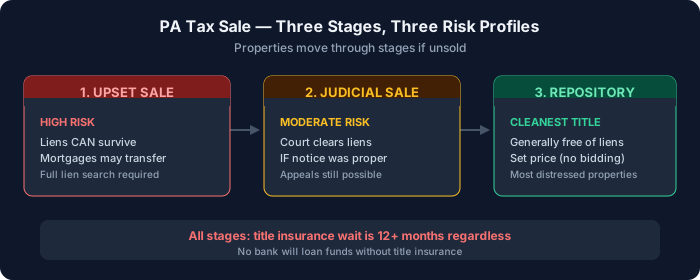
Pennsylvania's tax sale process has three stages, and this is where it gets confusing for out-of-state investors:
-
Upset sale: The first attempt. The property is sold for at least the amount of delinquent taxes, penalties, and costs. If you buy here, existing liens (mortgages, judgments) can survive the sale. The former owner has no right of redemption after an upset sale, but lienholders do.
-
Judicial sale: If the property doesn't sell at the upset sale, the tax claim bureau can petition the court for a judicial sale. This is a court-supervised process that is supposed to extinguish all liens, giving the buyer cleaner title. The court confirms the sale and the deed.
-
Repository sale: Properties that don't sell at judicial sale go into the county's repository, where they can be purchased at any time for a set price. These tend to be the most distressed, lowest-value properties.
The distinction between upset sale and judicial sale is the one PA investors actually need to understand. At an upset sale, you could be buying subject to an existing mortgage. At a judicial sale, the court process is designed to clear those liens. The due diligence is completely different depending on which stage you're buying at.
Where they happen
For the tax sale platform in Philadelphia, verify directly with the city's tax sale office or the Philadelphia Office of Property Assessment. The platform may change between sale cycles, and we don't want to send you to the wrong place with stale information.
What happens to liens
This varies by which stage of the tax sale process you're buying at:
-
Upset sale: Existing liens (mortgages, judgments) can survive. You may be buying the property subject to a mortgage that's larger than what you paid. This is the biggest trap for investors who don't understand the distinction. Always run a full lien search before bidding at an upset sale.
-
Judicial sale: The court process is designed to extinguish prior liens, but only if all lienholders received proper notice. If notice was defective, a lienholder can challenge the sale after the fact. Stuart Udis, an experienced Philadelphia investor on BiggerPockets, has warned that "notice obligations are frequently called into question resulting in successful appeals by prior owners."
-
Repository sale: Generally conveys free and clear of liens, but title companies are often reluctant to insure these properties without additional legal work.
Title insurance timeline
Getting title insurance on tax sale properties is difficult regardless of which stage you bought at. Victor Menasce, another experienced PA investor on BiggerPockets, notes that "title companies will only insure after a 12-month waiting period. Without title insurance, no bank will loan funds."
That 12-month wait, combined with the general skepticism title companies have toward tax sale title, makes flipping tax sale properties very difficult on a short timeline. You're either holding for a year-plus or selling to cash buyers at a discount.
For context: sheriff sale properties in most PA counties (outside Philadelphia) can get title insurance much faster because the court process provides more documentation. Philadelphia's deed delay is the exception that undermines this advantage even for sheriff sales in that specific city.
Side-by-side comparison
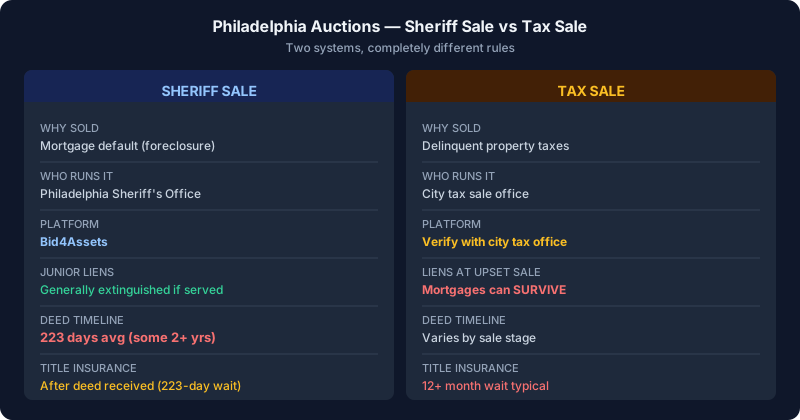
| Factor | Sheriff sale (foreclosure) | Tax sale (delinquent taxes) |
|---|---|---|
| Why it's sold | Borrower defaulted on mortgage | Owner didn't pay property taxes |
| Who runs it | Philadelphia Sheriff's Office | City tax sale office |
| Legal process | Judicial foreclosure (court supervised) | Upset sale (administrative), then judicial sale (court), then repository |
| Platform | Bid4Assets | Verify with city tax sale office |
| Junior liens | Generally extinguished if holders properly served | Survive at upset sale; extinguished at judicial sale if notice proper |
| Tax liens | Generally survive | Satisfied by the sale (that's the point) |
| Deed timeline (Philly) | Many months, some 2+ years | Varies by sale type |
| Title insurance | After deed received (long wait in Philly) | 12+ month wait typical |
| AuctionScout coverage | Not in Philadelphia (7 other PA counties) | No |
Common mistakes investors make
Assuming all Philadelphia auctions are sheriff sales. The city runs both. The rules are completely different. Know which one you're bidding at before you register.
Applying Ohio rules to Pennsylvania. Ohio has statutory deposit tiers, published appraisals, and a statewide RealAuction mandate. PA has none of these. What worked in Cuyahoga County does not automatically work in Philadelphia.
Expecting a fast deed in Philadelphia. Most PA counties process deeds in weeks. Philadelphia deeds can take many months. Plan your investment timeline, carrying costs, and exit strategy around the real number, not the number you'd get in Lancaster or Delaware County.
Buying at an upset tax sale without a lien search. At an upset sale, existing mortgages and judgments can survive. If you don't know what liens are on the property, you could pay $20,000 at auction and inherit a $150,000 mortgage. Judicial tax sales clear liens through the court. Upset sales do not.
Planning a quick flip on a tax sale property. Between the 12-month title insurance wait and the general difficulty of insuring tax sale title, your flip timeline is probably wrong. Run the numbers with a 12-month hold before bidding.
Skipping the case docket on sheriff sales. Junior liens are only extinguished if the holders were properly served in the foreclosure case. The case docket tells you who was named. If someone with a lien wasn't included, that lien follows you home.
Ignoring municipal liens on either sale type. Water, sewer, and code violation liens can survive both sale types. Check with the city's water department and L&I before you bid. A standard title search doesn't always catch these.
What AuctionScout covers (and doesn't)
We cover sheriff sales (mortgage foreclosures) in seven Pennsylvania counties: Butler, Fayette, Lancaster, Lebanon, Pike, Washington, and York. We provide auction listings, AI-powered valuations, renovation estimates, and investment analysis for every property on the calendar in those counties.
We don't cover Philadelphia sheriff sales, and we don't cover tax sales anywhere. Tax sales are a separate world with different data sources and a different investment profile.
We wrote this guide because the sheriff sale vs. tax sale confusion is real and nobody has answered it well. Philadelphia's deed delays, platform confusion, and multi-stage tax sale process are worth explaining even though we don't cover the city directly.
For our PA county coverage, see auctionscout.app/counties.
Frequently asked questions
Are Philadelphia sheriff sales the same as foreclosure auctions? Yes. Pennsylvania uses "sheriff sale" for what other states call a foreclosure auction. Court-ordered sale of property to satisfy a mortgage debt. Same thing, different name.
Are Philadelphia sheriff sales on Bid4Assets? Yes. Philadelphia sheriff sales run through Bid4Assets (bid4assets.com). You need to pre-register and post a deposit before bidding. This is different from Ohio, where sheriff sales use the RealAuction/RealForeclose platform.
How long does it take to get a deed after a Philadelphia sheriff sale? It can take many months, and some buyers have waited over two years. Ask the sheriff's office for the current deed processing time before you bid, and plan accordingly.
Can I get title insurance on a Philadelphia sheriff sale property? Not until you have your deed, and Philadelphia's deed processing can take many months. Once you have the deed, a title company can review the foreclosure case file and issue a policy if the title search is clean. Defects might require a quiet title action.
What's the difference between an upset sale and a judicial sale? Both are types of tax sales. At an upset sale, existing liens (mortgages, judgments) can survive. At a judicial sale, the court process is designed to extinguish prior liens. The upset sale comes first. If the property doesn't sell there, it moves to judicial sale, then to repository.
Do I need a lawyer for a Philadelphia sheriff sale? Not legally required, but strongly recommended, especially for your first few purchases. PA foreclosure law has specifics around service requirements, lien priority, confirmation nisi, and deed processing that trip up investors from other states.
Does AuctionScout cover Philadelphia? Not currently. Our seven PA counties are Butler, Fayette, Lancaster, Lebanon, Pike, Washington, and York. You can see all covered counties at auctionscout.app/counties.
Research Philadelphia, start buying in our PA counties
Even though we don't cover Philadelphia directly, the fundamentals in this guide apply across PA. If you're looking at sheriff sales in any of our seven covered PA counties, AuctionScout gives you AI valuations, renovation estimates, and a Deal Analysis tab (flip, BRRRR, short-term rental) for every property on the auction calendar.
Try it free for 14 days. No credit card. Set up alerts for the PA counties you're watching and get notified when properties hit the calendar. Takes 30 seconds.